
Flashback Trivia: Quiz Game
Lucky Echo LabsTrivia
4.6317.00 Reviews
- Version
- 1.0.60
- Installs
- 100.00K
- Age Rating
- Everyone
Screenshots
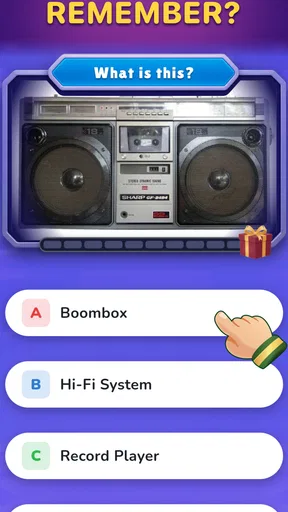
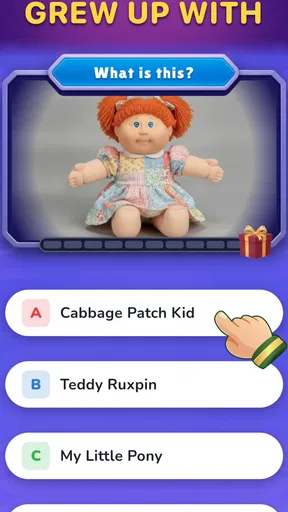
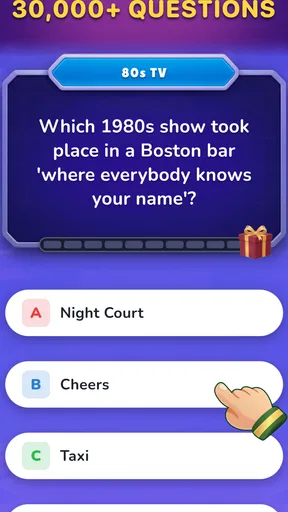
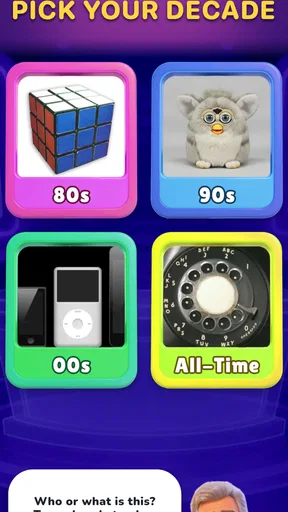
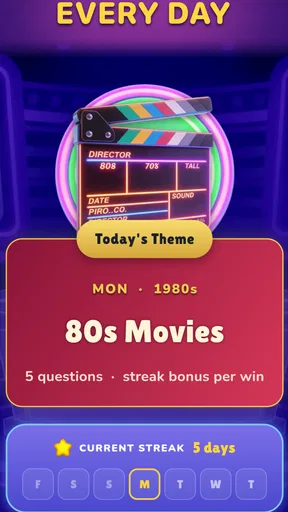
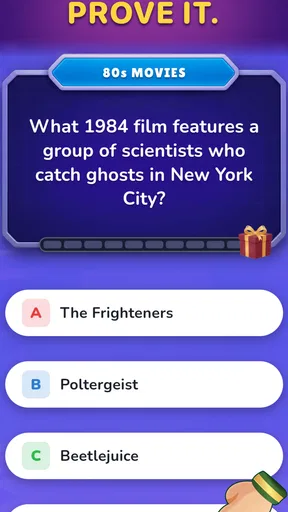
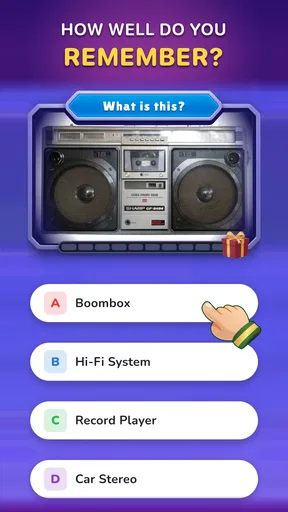
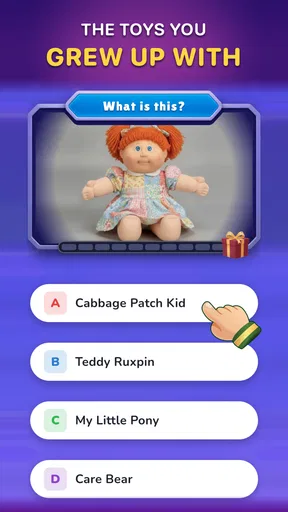
Our Review of Flashback Trivia: Quiz Game
 Analysis by Appyee
Flashback Trivia: Quiz Game is the kind of trivia game I open when I want something familiar, quick, and easy to understand. Its focus is pop culture from the 1980s, 1990s, and 2000s, so the appeal is less about learning obscure academic facts and more about testing how well I remember music, films, television, celebrities, games, and the general cultural details that surrounded those decades. That gives it an immediately recognizable personality instead of making it feel like another anonymous question bank.
After spending time with it, I see the strongest reason to try it as its combination of nostalgia and low commitment. The game is free, carries an Everyone age rating, and can be played offline, which makes it practical for a commute, a waiting room, or a short break without a dependable connection. At the same time, it is not equally suited to every trivia fan. Players who want deep explanations, competitive multiplayer, or a carefully structured educational course may find the format too light. For everyone else, it offers a pleasant way to turn half-remembered pop culture into a small daily challenge.
How the first sessions establish a reason to keep playing
The early goal is refreshingly simple: answer multiple-choice questions and see how much of the past I can still recall. There is no complicated control scheme to learn and no lengthy setup before the first question. That matters because trivia games often lose momentum when they bury the actual quiz under menus, profiles, or instructions. Here, the central activity is obvious from the beginning, and the three-decade theme gives each question a clear frame.
I also like that the time periods create a natural personal challenge. Someone who grew up with 1980s television may feel confident at first, while a younger player may find the 2000s section more comfortable. A mixed group can therefore compare different kinds of memory rather than simply asking who has the broadest general knowledge. The game works particularly well when friends or family members take turns, because a question that seems easy to one person can expose a blind spot for another.
The first useful habit is to treat the opening rounds as a calibration exercise rather than a score test. I pay attention to whether my mistakes come from confusing similar titles, forgetting names, or simply not recognizing a reference from a decade outside my experience. That tells me which parts of the game are likely to stay enjoyable and which may become repetitive. It also prevents a few difficult questions from giving the wrong impression that the entire quiz is beyond my level.
For a realistic everyday example, I can imagine opening it during a train ride with my phone in airplane mode. I might play a few rounds, stop when I reach my destination, and return later without needing to arrange a group match or find a strong signal. That offline quality is more meaningful than it sounds: it makes the game useful in places where many modern trivia alternatives are inconvenient, especially when they depend on live rooms, advertisements loaded from the internet, or constant account activity.
What counts as progress when the game stays lightweight
Flashback Trivia: Quiz Game does not need a large role-playing system to make a correct answer feel satisfying. The immediate progress signal is my growing familiarity with its question style and my ability to recognize patterns in the decades. When I begin remembering which areas consistently trip me up, I am already playing more intelligently. I stop guessing based only on a vague feeling and start separating genuine recall from answers that merely sound plausible.
That distinction is important in a multiple-choice format. A question can feel easy because one option looks familiar, yet the real test is whether I can identify the correct title, person, or cultural reference without being distracted by similar choices. I find the most rewarding moments are not the questions I answer instantly, but the ones where I narrow the options carefully and discover that a detail I thought I had forgotten was still somewhere in my memory.
The game’s audience response suggests that this straightforward loop has found its audience. It has a 4.6 average from around 2.8 thousand ratings, with more than 50 thousand installs. Those figures do not prove that every player will enjoy the same topics, but they do indicate that the central idea is connecting with a substantial group of people. I would interpret that as a sign of reliable accessibility rather than evidence of unusually deep trivia design.
One practical tip is to avoid judging the game only by a single session. Nostalgia-based quizzes can feel uneven depending on which decade appears first and whether the selected subjects match my interests. A better routine is to play at different times and notice whether the broader mix keeps surprising me. If I only enjoy one era, the experience may feel narrow; if I enjoy moving between them, the changing context becomes part of the appeal.
The current version is 1.0.41, and the game is developed by Lucky Echo Labs. For someone deciding whether it is worth trying, the important point is that this is presented as a focused trivia experience, not as a sprawling entertainment platform. I would approach it expecting a compact nostalgia quiz, not a long-term collection game with a large world to explore.
Difficulty: familiar memories versus genuine recall
The difficulty in a pop-culture quiz is personal. A question about a famous film may be immediate for one player and completely outside another player’s experience. The decade structure makes that especially noticeable because cultural memory is tied to age, location, interests, and the media someone actually consumed. I appreciate that this gives the game a social dimension, but it also means the challenge curve may not feel smooth for everyone.
Instead of assuming that a correct answer always means the question was easy, I look at how I reached it. Did I know the answer, recognize the era, eliminate two obviously wrong choices, or take a lucky guess? This is a useful way to measure the game’s real challenge. A long run of correct answers can still hide uncertainty if I am relying on recognition rather than recall, while a missed answer can be valuable when it introduces a reference I genuinely did not know.
The three-decade range creates a built-in difficulty curve without requiring me to invent one. Familiar periods feel comfortable, while less familiar periods act as a natural increase in difficulty. That is a strength for casual play because I can enjoy an easy run without feeling that every question is a test of specialist knowledge. The trade-off is that players seeking a carefully graduated progression may find the experience inconsistent. A 1980s question can be harder than a 2000s question, regardless of where it appears, simply because of personal background.
I would not recommend relying on the game as a serious way to verify cultural facts. Multiple-choice trivia is good at prompting recognition and conversation, but it is not the same as providing context or explaining why an answer is correct. If I miss a question, I may want to look up the subject separately. That is not a flaw unique to this title; it is a limitation of the short-question format. Still, it affects whether the game is right for someone who wants every round to teach a complete lesson.
Another non-obvious way to use it is as a memory warm-up before a social gathering. Rather than playing for a long stretch, I can use a few rounds to bring old songs, shows, or films back to mind, then turn those references into conversation. This works better than treating the game as a solitary score chase because the subject matter naturally invites stories about what people watched or listened to at different ages.
Where the pacing works, and where it may lose pressure
The offline design supports a relaxed pace. I do not have to commit to a live opponent, wait for another person, or worry about a connection interrupting a round. That makes the game forgiving, which is ideal when I want a small distraction. I can stop after a handful of questions without feeling that I have abandoned a larger match.
The same quality can reduce urgency. Competitive trivia games create pressure through timers, rankings, head-to-head play, or visible seasonal goals. Flashback Trivia: Quiz Game is more appealing when I want control over the session than when I want the tension of a public contest. Players who need external competition to return every day may find the pacing too gentle, particularly after the initial novelty of the decades has faded.
This is where the game’s free model deserves a realistic look. It costs nothing to start, but optional in-app purchases range from $0.69 to $19.99 per item. I would begin without spending and first decide whether the question mix and pacing hold my attention. The presence of purchases does not automatically make the game poor value, but it does mean I would avoid treating an impulse purchase as a solution to boredom. If the basic loop stops feeling fresh, paying more is unlikely to change the underlying style of play.
For families, the Everyone rating makes the game easier to consider as a shared casual activity. I would still use my own judgment about which pop-culture subjects are suitable for a particular child, because an age label cannot predict every reference or a family’s preferences. The simple answer format also makes it approachable for relatives who are not comfortable with action games or complex mobile interfaces.
On the other hand, I would skip it if my priority were a serious competitive ladder, detailed answer explanations, or a large multiplayer community. A dedicated online quiz platform would be a better fit for live rivalry, while a general knowledge app with educational notes would serve someone who wants to understand every answer. Flashback Trivia is more specific: it is built around the pleasure of remembering entertainment from three recognizable eras.
Does the nostalgia remain strong after the first novelty?
Retention depends on whether the player enjoys the subject matter enough to tolerate occasional repetition or uneven difficulty. The initial hook is strong because the decades provide an instant emotional connection. I may remember where I was when a song became popular, which television show a family watched together, or which film everyone discussed at school. That personal association gives an ordinary multiple-choice question more weight than a random fact.
But nostalgia can also be a limited resource. If the questions repeatedly stay within the same familiar corner of pop culture, the experience may start to feel predictable. The game is at its best when it moves between different kinds of references and occasionally challenges me outside my preferred decade. I would therefore recommend short, repeatable sessions rather than marathon play. A few rounds leave room for curiosity; a long session can make the format feel more mechanical.
My preferred workflow would be to alternate between comfortable and unfamiliar eras. I might begin with the decade I know best, use that to build confidence, and then switch to another period where I expect more mistakes. This creates a personal rhythm without needing a formal difficulty setting. It also turns wrong answers into a reason to continue rather than a reason to quit, because they reveal which cultural gaps I can gradually close through recognition.
There is a useful social retention loop here as well. I can hand the phone to someone who remembers a different generation and compare results. A parent, sibling, partner, or friend may recognize references that I miss, while I may perform better in another section. That kind of informal comparison gives the game more life than a private score alone, especially when the goal is conversation rather than proving expertise.
Still, I would not call the game essential for players who already have a favorite trivia app with a large topic library. A broader alternative may offer more variety, while a specialized music or film quiz may provide more depth in one area. Flashback Trivia earns its place through its particular time capsule. If that three-decade focus does not appeal to me, there is no reason to force the fit simply because the game is free.
My verdict on the progression and the overall fit
Flashback Trivia: Quiz Game succeeds by keeping its promise narrow and understandable. It gives me an accessible multiple-choice challenge built around 1980s, 1990s, and 2000s pop culture, with offline play making it unusually convenient for disconnected moments. The early goals are clear, the progress comes from improving recognition and recall, and the difficulty naturally changes according to the decade and my own background.
I think its best audience is someone who wants a low-pressure quiz with a strong nostalgic identity. It is also a good choice for families and friends who enjoy comparing memories, or for anyone who wants something lighter than a live competitive trivia service. The free entry point makes trying it easy, and the Everyone rating broadens its practical use, while the optional purchase range is a reason to test the core experience before spending.
My reservations are equally clear. The format may not provide enough pressure for dedicated competitors, and the decade-based challenge can feel uneven rather than carefully graduated. It is not the right replacement for a learning tool with explanations or a multiplayer game built around rankings. Its long-term appeal depends on the variety of references and on how strongly I connect with the chosen eras.
Overall, I would recommend it as a casual nostalgia game rather than an all-purpose trivia platform. Its strongest progression is personal: remembering more, recognizing gaps, and finding new reasons to compare answers with other people. If that sounds more appealing than chasing a leaderboard, the focused design of Flashback Trivia: Quiz Game makes it an enjoyable free download to try, especially when I need an offline distraction that can begin and end in just a few minutes.
Privacy and Permissions
See what permissions an app requests and how it handles your data.
- Wi-Fi connection information
- view Wi-Fi connections
- Other
- view network connections, full network access, run at startup, control vibration, prevent device from sleeping, Google Play license check
Verdict
Strengths of Flashback Trivia: Quiz Game
- Quick trivia rounds are ideal for short breaks or casual play.
- A broad mix of categories keeps the questions from feeling repetitive.
- Simple controls make the game accessible to players of different ages.
- Flashback-themed questions can trigger enjoyable memories and nostalgia.
- Progress tracking gives regular players a reason to keep improving.
Limitations of Flashback Trivia: Quiz Game
- Some questions may feel too easy for experienced trivia players.
- Difficulty can vary noticeably between categories and individual rounds.
- Repeated questions may reduce the challenge after extended play.
- An internet connection may be needed for certain features or updates.
- Players seeking deep explanations may find answer details limited.
Other Releases by Lucky Echo Labs
View All
TriviaPeak: Trivia Quiz Games
Trivia4.6
Similar Picks in This Category
View All
Millionaire 2026 Quiz & Trivia
Quiz & Trivia Games by Submarine Apps4.5

Brain Test 2: Tricky Stories
Unico Studio4.7

Trivia Crack: Brain Quiz Games
etermax4.4

QuizzLand. Quiz & Trivia game
Quiz & Trivia Games by Mno Go Apps4.8

Brain Test: Tricky Puzzles
Unico Studio4.7

Logo Quiz
bubble quiz games4.5
Frequently Asked Questions
What is Flashback Trivia: Quiz Game?
Flashback Trivia: Quiz Game is a quiz app built around questions that test your memory and knowledge of past events, entertainment, culture, and general topics. Its main appeal is the nostalgic format: instead of simply answering random questions, players are encouraged to recall familiar moments, facts, and references. It is suitable for casual solo play and short sessions when you want a light mental challenge.
How does the gameplay work in Flashback Trivia: Quiz Game?
The game presents trivia questions with multiple-choice answers, and you select the option you believe is correct before moving to the next challenge. Correct answers help you progress and demonstrate your knowledge, while incorrect choices show where your memory may need improvement. The experience is easy to understand, making it accessible to newcomers, although some questions can become increasingly difficult as you continue playing.
Is Flashback Trivia: Quiz Game free to download and play?
Flashback Trivia: Quiz Game can generally be downloaded without an upfront purchase, but the exact free content and available features may depend on the version installed and the platform you use. As with many mobile quiz games, optional advertisements, extra content, or in-app purchases may be included. Before downloading, check the Google Play Store or App Store listing for current pricing, subscriptions, and purchase details.
Can I play Flashback Trivia: Quiz Game offline?
Offline availability may vary depending on the app version and the feature you are using. Basic question sets may work without a continuous connection if they have already been included or downloaded, but advertisements, updates, leaderboards, cloud features, and additional content can require internet access. If offline play is important to you, test the game after disabling mobile data and Wi-Fi rather than assuming every mode will work.
Who should download Flashback Trivia: Quiz Game?
Flashback Trivia: Quiz Game is a good choice for players who enjoy general knowledge, nostalgia, and quick question-and-answer sessions rather than complex strategy or action gameplay. It can also work well as a casual group activity, since friends and family can compare answers and scores. However, users who dislike advertisements, repeated question formats, or optional purchases should review the store information carefully before installing it.
Play our best games!


